Andrea Marechal Watson on some of the New Year’s most sensational shows

Andrea Marechal Watson on some of the New Year’s most sensational shows

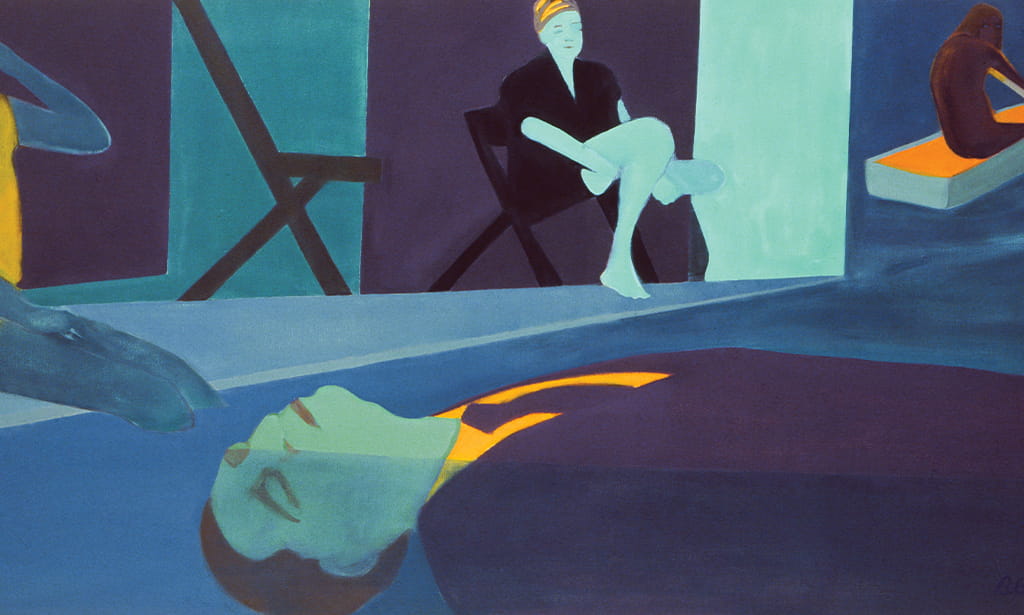
The Brutalist grey walls of the Barbican will be transformed into a colourful Latin American fairground in this show – but it’s not an easy ride. Spanning 60 years of the work of the Colombian artist and educator Beatriz González (b. 1932), the visitor will be taken on a journey though the myriad media that she employs: beds, tables, trays, TVs boxes, curtains, painted backdrops and wallpaper, not to mention the paintings.

The exhibition opens with a selection of González’s earliest paintings, which abstracted works by artists such as Velázquez and Vermeer into bold and colourful forms. Her curiosity about how Western art had infiltrated Colombia led to a 12-metre long canvas after she had seen Manet’s famous work Le Dejeuner sur l’herbe in a shop window. She collected newspaper clippings reporting on violent conflict and loss. The Sisga Suicides (1965) reinterprets a newspaper photograph of a tragic story of a double suicide. In the face of the increasing love affair of her peers with abstraction, González remained defiantly figurative.

From 1970, González also started to work with found objects and flea market furniture finds, and switched from working with oil on canvas to enamelling anything she could somehow transform – a coat rack becomes a sculptural object, its mirror replaced with González’s version of the Mona Lisa. The 1980s saw a shift in tone as González responded to the violence in Colombia precipitated by the drugs wars and a corrupt government. She begins collaging news images of weeping women into surreal scenes rendered in sickly greens and yellows.

González repeatedly addresses the recurring violence in Colombia, its colonial legacy and its thousands of lost and displaced people. 

The final work in the exhibition, A Posteriori references her site-specific intervention at the Central Cemetery in Bogotá where in 8,965 niches victims of the conflict – many anonymous – are now remembered.

25th February to 10th May at the Barbican Gallery, London, UK |  www.barbican.org.uk

William Nicholson

Pallant House, the charming gallery located in the famous cathedral town of Chichester, has just announced its programme for 2026 including British Landscapes: A Sense of Place which explores works from 1910 to 1970 and will showcase works by Ivon Hitchens, Graham Sutherland, Eric Ravilious and Paul Nash among other greats.

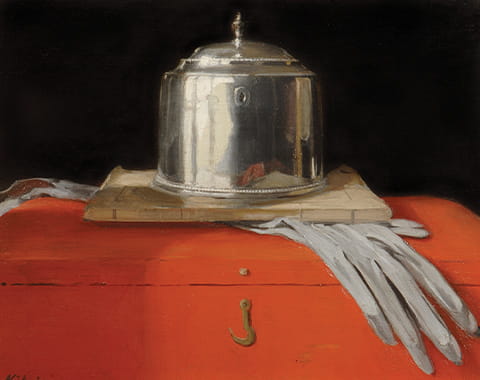
Currently on show there is a slightly lesser known but nevertheless important British painter, William Nicholson (1872-1949). The first major presentation of Nicholson’s work since 2004, it looks at his career and the versatility of his artistic vision. The exhibition considers his spectacular output, from his acclaimed prints and book illustrations to his sensitive portraits, still life and landscapes, Nicholson’s paintings feature dazzling brushwork and exquisite colours that speak of his delight in the observation of his subjects. Visitors will discover how his art responded to the shifting politics and society of his day – from the upheaval of the First World War to his close ties to London’s theatre scene.

Until 10th May at Pallant House Gallery, Chichester, West Sussex, UK  |  www.pallant.org.uk

Niki de Saint Phalle and Jean Tinguely: Myths & Machines

The giant resin sculptures of prancing ladies that greet the visitor to Hauser & Wirth’s Somerset galley look for all the world like a new commission. But no, these frolicking females in their brightly coloured mosaic bathing suits date back to the 1960s. They are the work of Niki de Saint Phalle who shares this new exhibition with her much better-known partner the Swiss sculptor Jean Tinguely.


No two artists could be more different. In contrast to Saint Phalle’s giant dancing girls and golden altarpieces, Tinguely’s kinetic sculptures look a bit weary. Made from odds and ends of (often recycled) metal, they seem to have had their day not only as useful tools but as art experiences. They are too old now to be set in motion other than very briefly, which was originally part of their appeal.

The exhibition also features unseen works on paper and art decor by Saint Phalle and three of her famous “shooting paintings”. She made these by firing a rifle at bags of paint pinned to a wooden or plaster surface resulting in a form of drip painting. These do ‘work’, unlike the kinetic sculptures.

Saint Phalle rather steals the show with works that are a great deal more entertaining than Tinguely’s broken down contraptions.

Until 1st February 2026 at Hauser & Wirth,
Bruton, Somerset, UK

www.hauserwirth.com