Andrea Marechal Watson on Egypt’s spectacular new cultural landmark, enduring artistic rivalries, and the intimate worlds of celebrated painters
Zurbarán
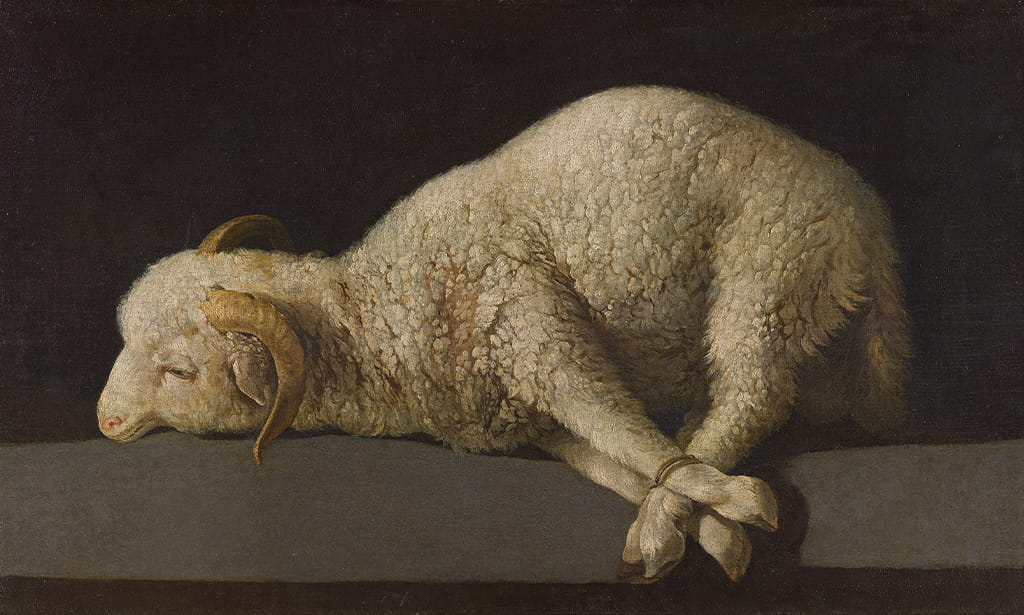
Francisco de Zurbarán (1598-1664) was one of the leading painters of 17th-century Spain, a contemporary of Diego Velazquez. Alongside soaring depictions of saints and immense altarpieces, he also painted a small number of extraordinarily natural and direct still lives.
The first major monographic exhibition devoted to the artist opens this spring at the National Gallery and will feature nearly 50 paintings spanning the artist’s career.
Zurbarán spent most of his life in Seville, then one of the richest cities in Europe, and painted primarily for the city’s religious orders, producing altarpieces and cycles of paintings of staggering scale and ingenuity, but also for private patrons and even for the king of Spain. The exhibition will be divided into seven different sections arranged thematically.
The last of the rooms displays the still lifes, including four by Zurbarán’s son Juan who followed in his father’s footsteps. It is thought that Francisco de Zurbarán made fewer than ten still lifes in his lifetime, so this room offers visitors a rare and revealing opportunity to discover some remarkable examples of this element of his art.
From 2nd May until 23rd August
at the National Gallery, London, UK
www.nationalgallery.org.uk

Turner & Constable
A marvellous timeline opens Tate Britain’s celebration of the 250th anniversaries of JMW Turner (1775–1851) and John Constable (1776–1837). Born a year apart, their backgrounds could not have been more different: Turner, son of a Covent Garden barber, and Constable, raised in Suffolk by his family’s mill.
The contrast runs through their careers. Turner was a prodigy, entering the Royal Academy at 15 and becoming an Academician at 27; Constable arrived later, elected only at 52 after years of struggle. Turner’s output dwarfed his rival’s, with some 256 works and 900 prints compared to Constable’s 104 works and 47 prints, and he even outlived Constable by 16 years.
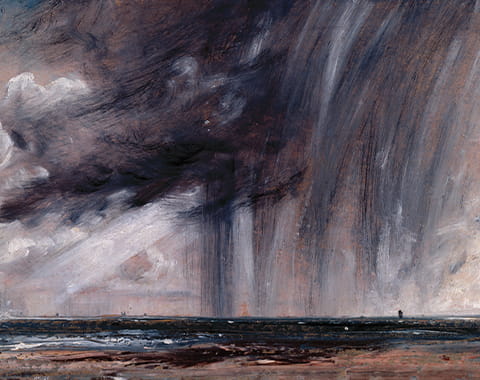
Critics cast Constable as painter of truth against Turner’s poetry and romanticism, yet both transformed landscape painting during a period of growing public interest and critical debate. The exhibition gathers over 190 works. Constable’s Suffolk scenes and cloud studies reveal his pioneering outdoor oils, while Turner’s travels across Britain and Europe produced rapid sketches and sublime Alpine views, alongside experimental and secret techniques.
Their rivalry turned theatrical: Constable seized the prime spot in 1831 with Salisbury Cathedral; Turner answered a year later by adding a shocking red dot to a seascape to outshine a neighbouring Constable. The show ends with a fascinating film on their enduring legacy, featuring contemporary artists including Frank Bowling and Bridget Riley.
Until 12th April at Tate Britain,
Millbank, London, UK | tate.org.uk

Madame X and the Sargent scandal
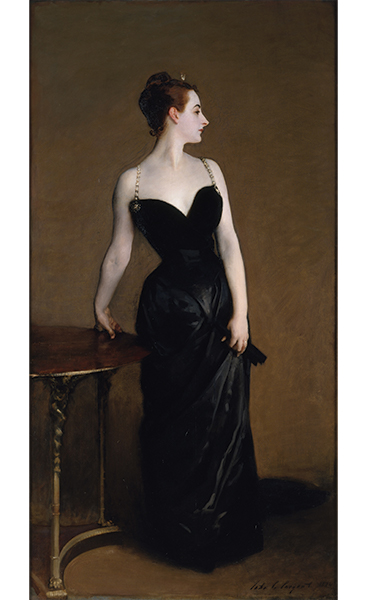
Two major shows devoted to the American painter John Singer Sargent (1856–1925) have just closed but it’s not too late to see at least one of the paintings that the exhibitions were partly built around - and the work that Sargent himself liked best of all despite the storm of controversy which surrounded its first exhibition.
Much ink has been spilled over the infamous Portrait of Madame X (which hung in his studio until his death) but which scandalised the art world when it was shown at the Paris Salon in 1884.
Sargent had arrived in Paris in 1874 at the age of 18. He was hugely talented and had a sound commercial head which enabled him to navigate his path through the French exhibition system.

Some critics have even suggested that in exhibiting the portrait of Virginie Gautreau, a ‘professional beauty’ and socialite known for her many extra marital affairs, Sargent was inviting
bad publicity.
Today the reaction to the work seems extraordinary. Originally portrayed with one shoulder strap hanging down, an “indecent” and “vulgar” outfit according to the press, Sargent later repainted it to assuage complaints. He was even accused of manufacturing publicity by his choice of model and pose.
Today, the portrait is regarded as the Mona Lisa of the Metropolitan Museum of Art. There is also a copy in Tate Britain for those who would like a chance to see just how much times and tastes have changed.